


 +994 50 667 81 18

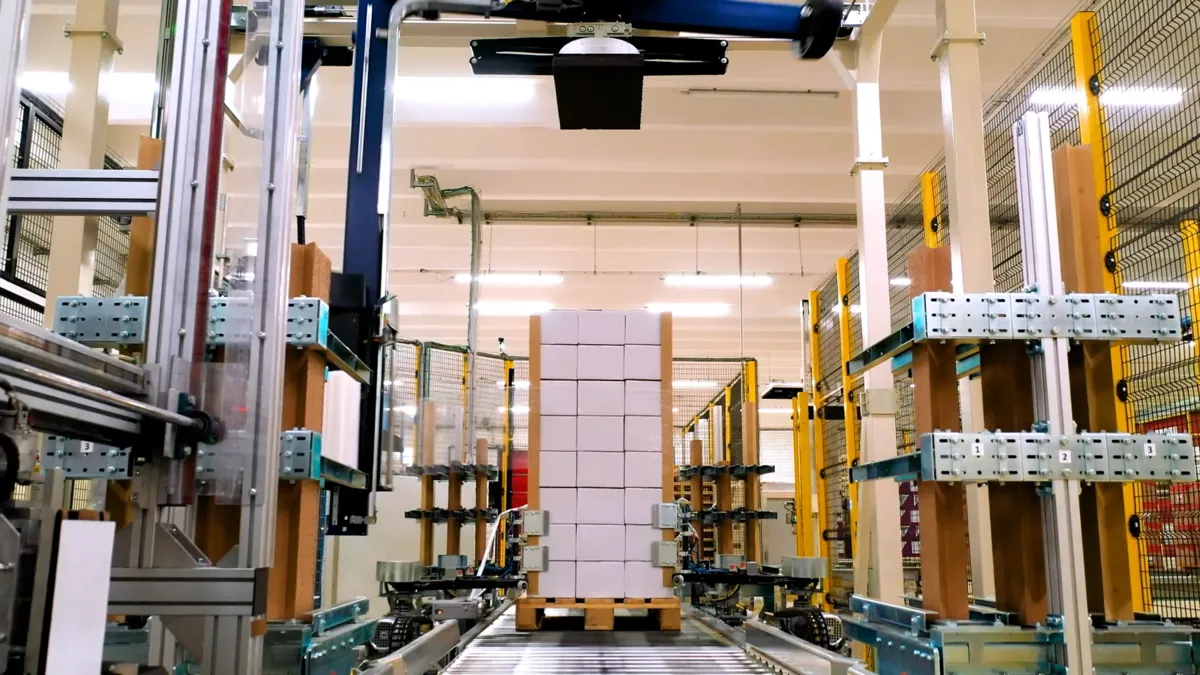
The rapid development of Azerbaijan's non-oil sector has completely transformed the competitive landscape for local manufacturing enterprises and factories. Under modern market conditions, factory owners and CEOs invest heavily in raw material quality, attracting a professional workforce, and aggressive sales strategies. At first glance, everything looks perfect: production lines are running, products are being manufactured, and they are delivered to sales points through the distributor network. However, at the end of the month, when financial reports and profit/loss (P&L) statements are laid on the table, a harsh reality emerges — actual expenses significantly exceed the projected budget.
Where does this financial leak come from? Many factory managers look for the problem in the wrong places — in raw material prices or energy costs. However, the reality is that the largest capital losses stem from invisible, yet daily recurring warehousing, packaging, and logistics errors. In industrial production, microscopic seconds and grams grow exponentially into macroscopic budget deficits. In this article, we will examine the 3 hidden factors that cause the loss of thousands of manats every month in Azerbaijani factories through detailed and mathematical analysis.
1. Microscopic Errors in Filling Lines and the "Gift" Product Paradox
The most sensitive point for enterprises producing household chemicals (liquid detergents, shampoos), vegetable oils, automobile, and engine oils is the filling line. If your enterprise uses old-generation or semi-automated filling mechanisms, the calibration of the system is frequently disrupted. This causes a few grams of "overfilling" or "underfilling" in each container.
Mathematical Analysis of the Hidden Loss: Let's do a calculation with real numbers. Suppose your factory produces engine oil, and the filling line overfills an average of just 5 grams in each 1-liter container. At first glance, 5 grams may seem like an insignificant detail. Now, let's consider the scale of production:
- Daily production volume: 15,000 containers
- Daily total loss: 15,000 × 5 grams = 75,000 grams (75 liters)
- Monthly total loss (26 working days): 75 liters × 26 = 1,950 liters
This means that every month, without realizing it, you are giving away approximately 2 tons of finished product to customers completely free of charge as a "gift." If you calculate the industrial sales value of that product, you will see how a single filling error drills a massive hole in the company budget.
The reverse scenario — underfilling containers — is an even greater disaster. In an environment where modern consumer rights are protected and state standards are strictly monitored, releasing under-weight products to the market can destroy a brand's hard-earned reputation in a single day, as well as face the company with heavy legal fines.
2. Non-Standard Manual Labor: Collapsing Pallets and Loss of Reputation
In the stage where products leave production and are transferred to the warehouse and then to the logistics chain, packaging quality is paramount. In many local enterprises, forming and sealing cardboard boxes, as well as wrapping pallets, still relies on manual labor. Where there is a human factor, it is impossible to speak of a stable standard.
Each worker's physical strength, fatigue level at the beginning versus the end of a shift, and tape application angle are different. Cardboard boxes that are not properly folded by hand and lose their symmetry collapse under pressure when stacked in 3-4 tiers in the warehouse, as the laws of physics come into play. Because the center of gravity is not distributed correctly, the boxes in the bottom layer crush under the weight.
Disasters Experienced During Transit: The real problem begins after the product is loaded onto trucks and hits the road. Sharp turns, sudden braking, and vibrations during transit disrupt the structure of poorly hand-wrapped pallets. As a result of palletizing that does not meet modern standards:
- Loads topple over each other inside the truck;
- Cardboard boxes tear, and the products inside crush, losing their commercial appearance;
- Large supermarket chains immediately reject such boxes at the reception point and return the entire shipment.
Consequently, your company suffers direct financial damage due to the damaged product and gains a reputation as an "unprofessional supplier" among your partners. These monthly recurring returns mean thousands of manats in additional logistics and disposal costs.
3. Cap Sealing Defects and Leakage Risks During Transport
In mechanically controlled or manually sealed capping systems, uneven tightening of caps is one of the most frequently experienced problems in the industry. Due to internal pressure generated during transport and warehousing, microscopic leakages begin from containers whose caps are not fully seated.
A liquid leak from a single container softens an entire cardboard box. This softening creates a chain reaction, causing the box to lose its structural strength and leading to the collapse of dozens of other boxes stacked on top of it. As a result, an entire pallet topples over, damaging other healthy goods around it. As production grows and logistics turnover increases, these non-standard risks and the hidden financial losses resulting from them continue to multiply exponentially.
Strategic Way Out: Turn Losses into Savings with the Right Automation
In the modern Industry 4.0 era, the only effective way to combat the problems listed above is to automate business processes pointwise. It is impossible to save the company by hiring more workers or increasing penalties — the system itself must be perfected.
As Azromex LLC, we do not just supply equipment to industrial enterprises; we build complete engineering solutions tailored to the individual structure of your factory that reduce losses to zero. Our company is the official distributor of the global industrial giant ROBOPAC in Azerbaijan, and this advanced ecosystem we offer completely eliminates all the leaks you are unaware of:
- Millimetric Precision Filling Systems: Our high-tech automated filling lines offered for your household chemicals, vegetable, and engine oil production fill the product with zero error, regardless of weight. By ensuring that caps are sealed completely and with equal force, it eliminates leakage risks and puts an end to "gift" product leaks.
- ROBOPAC Packaging Solutions: Thanks to ROBOPAC cardboard box formers, sealers, and automated pallet wrapping equipment, human dependency is minimized. The optimal stretch tension according to the product type, weight, and shape is automatically calculated. As a result, cardboard boxes are sealed with perfect symmetry, pallets gain monolithic integrity, and the problem of loads toppling or crushing on the road becomes history.
Let's Calculate the Hidden Losses in Your Factory Together! Let's analyze your production and warehouse lines together. Azromex specialists are ready to carry out an individual audit for you and prepare a savings model that will completely optimize your packaging and filling costs. Do not let your budget drain away; strengthen your business with the power of modern technology.
Request a Consultation
Our specialists will get back to you as soon as possible to suggest the most suitable automation and packaging solutions for your project.